
Executive Master of Business Administration
The Executive Master of Business Administration prepares students to lead in digitally agile and ever evolving environments.
Students learn to apply the principles of leadership, entrepreneurship, and innovation within organisations, navigate the legal, governance and ethical challenges found in professional environments, utilise new technologies for entrepreneurial ventures, and apply an entrepreneurial mindset to business planning and strategy.
Students also discover how to negotiate the structure and financing of ventures and undertake supervised research projects.
The program employs authentic learning tasks, real-world scenarios and case studies, lab workshops and client-based projects to provide students with hands-on experiences.
Delivered through Chancellor Institute, the Executive Master of Business Administration features:
✔ World-Class Faculty – Learn from international industry experts
✔ Flexible Learning – Complete online in one year full-time or two years part-time
✔ Global Recognition – Earn an accredited degree
✔ Capstone Project – Apply real-world business solutions through research-driven strategy
✔ Networking & Career Growth – Connect with a global network of professionals and leaders


Accreditation
The Executive Master of Business Administration is designed and delivered by Chancellor Institute and accredited by the International Executive School.
Duration
1 Year Full-Time,
2 Years Part-Time
Mode
100% Online
+ Live Workshops
Intakes
February
June
September*
Program Overview
Learning Outcomes:
- Apply the principles of leadership, entrepreneurship, and innovation within organisations
- Apply legal, governance and ethical practices in a professional environment
- Use new technologies for entrepreneurial ventures
- Apply an entrepreneurial mindset to business planning and strategy
- Negotiate the structure and financing of ventures
The program employs authentic learning tasks, real-world scenarios and case studies, live workshops and client-based projects to provide students with hands-on experiences.
Career Pathways
- Entrepreneurs
- Managers
- Management Consultant
- Project managers
- Business development
- Corporate Services Manager
- Product managers
- Marketing specialists
Courses for the Executive Master of Business Administration
PB501 Digital Law, Governance and Ethics
PL500 Leadership Development
PB504 Entrepreneurial Mindset
PB605 Business Planning and Strategy
PB609 Digital Marketing
PB607 Entrepreneurial Finance
PR600 Capstone Project A: Research Methods
PR601 Capstone Project B: Thesis
Entry Requirements
A Bachelor’s degree or equivalent, or a minimum of five years documented, relevant work experience. More information.

Course Details
Core courses within the Executive Master of Business Administration include the following:
This unit provides students with an introduction to key legal, governance and ethical issues related to today’s digital media and business landscape. Issues are explored from both an Australian and international perspective, equipping students to apply their learning both within and across diverse jurisdictions. Students will come to understand how, for example, privacy is not merely a legal issue, but has important governance and ethical dimensions. It is the tensons between these dimensions that prove particularly challenging in professional life and which this subject equips students to navigate.
LEARNING OUTCOMES
On successful completion of this unit students will be able to:
- Analyse the relationship between technology, law, and regulation, and the challenges practitioners face in a digital society.
- Apply a sound practical knowledge of the principles of governance in digital industries.
- Critically analyse an existing or hypothetical problem from a range of topics and evaluate potential courses of action citing relevant legal and ethical principles.
This unit introduces students to the concept of leadership within organisations. Students learn how to apply high ethical standards when analysing and evaluating leadership challenges and opportunities and the principles of corporate social responsibility and sustainability. The unit focusses strongly on developing emotional intelligence and intrapersonal strategies that contribute to personal and professional growth. Students learn how to create personal and professional goals and action plans, how to apply time management strategies and how to contribute to productive interpersonal relationships and team outcomes. Students also have opportunity to engage in professional networking and with guest speakers and learn how to apply a global perspective and understanding of cultural diversity within the workplace.
LEARNING OUTCOMES
On successful completion of this unit students will be able to:
- Applying high ethical standards when analysing and evaluating leadership challenges and opportunities
- Understand the principles of corporate social responsibility and sustainability
- Apply emotional intelligence and intrapersonal development strategies that contribute to personal and professional growth
- Contribute to productive interpersonal relationships and team outcomes
In this unit, students will explore the concept of an entrepreneurial mindset. They will examine the set of skills that allow people to identify and make the most of opportunities or to overcome or learn from setbacks. Businesses value employees who demonstrate their ability to think outside the box and see possibilities for large scale improvements, or expansion of a business, or small adjustments to improve processes. As part of the unit students will consider the different types of entrepreneurial mindsets including the traditional view of entrepreneurs, intrapreneurs, social entrepreneurs and public entrepreneurs and examine the similarities and differences in both the mindset and how these individuals can operate. In addition students will also review organisational settings that either create or inhibit the effective operation of the entrepreneurial mindset in a variety of environments including the policies necessary to support these characteristics and the practical tools to encourage and assist the development of entrepreneurial mindset.
LEARNING OUTCOMES
On successful completion of this unit students will be able to:
- Debate different forms of entrepreneurial theory and thinking and its role for idea and business development in the global economy
- Critique different forms of entrepreneurial behaviour including approaches to teamwork, communication, creativity, innovation, risk-taking and social/ethical responsibility
- Articulate the fundamental elements in formulating and evaluating an entrepreneurial business plan for a start-up organisation or for a new project in an established organisation
- Integrate theory and real life examples to the challenges of managing rapid growth in an entrepreneurial environment
- Investigate and report on the wide source of information and assistance available to entrepreneurs and significant entrepreneurial business developments and outcomes in recent years.
This unit introduces the student to the skills necessary to be a successful entrepreneur. For the business person, management is less about day-to-day operations of the organisation, and more about positioning the organisation, articulating a vision, and designing the organisation to achieve competitive advantage. Throughout the unit, students will examine issues essential for the organisation’s long and short-term competitive position. As part of this approach the students will examine the immediate business environment but in the context of identifying potential gaps in the market or opportunities that may emerge from time to time. Traditional business planning, which is covered in this unit, is complemented by the studies undertaken in the entrepreneurial mindset unit and the skills developed through the entrepreneurial financing unit.
LEARNING OUTCOMES
On successful completion of this unit students will be able to:
- Propose business growth strategies in a professional, understandable, structured, persuasive and logical manner based on sound research and analysis
- Evaluate business decisions/practice in light of economic, social and environmental sustainability
- Integrate key ethical implications of business decisions/practice in strategy
- Critique the role of the leader in designing and implementing strategy
This unit exposes students to a broad overview of digital marketing elements and explores strategies in social communication as it relates to brand building, customer acquisition, and business growth. Student also explore contemporary issues surrounding marketing analytics, ethics and digital privacy laws as they relate to digital marketing-communication activities. The latest digital trends, tools and techniques are touched upon as learners create a digital marketing plan that includes mapping a customer value journey for the creation of a digital marketing funnel. Linking marketing theory with practical business experience through case studies from cutting edge companies, the unit explores how companies can get the most out of digital media and technology to meet their marketing goals. Students also produce a digital marketing plan for a real-world client.
LEARNING OUTCOMES
On successful completion of this unit students will be able to:
- Apply best practices related to ethical marketing and data privacy
- Analyse a brand’s digital presence and digital marketing strategies
- Design a customer value journey and a list building funnel for a brand, product or service
- Create a digital marketing plan
Entrepreneurial Finance will equip students with knowledge and skills for financial appraisal and decision optimisation. Students will acquire the key skills required for project appraisal and funds sourcing. The main project evaluation techniques will include present worth, equivalent annual cash flows, net present value, payback method, benefit to cost ratio and return on investment. Students will create a sound financial plan for a venture and pitch their proposal to a panel of venture capitalists
LEARNING OUTCOMES
On successful completion of this unit students will be able to:
- Apply financial modelling, analysis and interpretation techniques for project appraisal and selection.
- Complete venture appraisal studies through case study analysis.
- Create a fully developed project proposal.
- Deliver a persuasive project proposal to potential investors.
This unit provides students with an overview of the major research methods used in both applied (workplace) and academic environments. Over the course of the unit, students will be introduced to the different types of research and will put their learning into practice by writing a literature review and developing a research proposal (or a proposal for a dissertation and a workplace portfolio) on an agreed topic of current relevance. Students are encouraged to think broadly when selecting a topic. The only requirements are that (i) the topic is relevant to the student’s discipline, (ii) there is a suitable instructor to supervise it, (iii) the topic is of sufficient interest and depth to justify the research, and (iv) there is sufficient research potential (previous publications, opportunity for original empirical research, capacity to interview informed sources, etc.) to enable the research to be completed to a high standard. Consequently, the proposed research may be empirical, conceptual, or legal in nature. Likewise, it may be in the form of an exegesis (where students analyse or interpret existing work on a topic) or may pursue an original research question. Topics covered in this unit include the importance of theory, research methods and methodologies, and the need to identify a concise research problem or hypothesis. Students will become familiar with the major types of research, including legal, conceptual, and empirical (quantitative, qualitative, and mixed methods). This unit will be useful for all students, whether they are about to enter the workforce or are preparing to continue their studies further.
LEARNING OUTCOMES
On successful completion of this unit students will be able to:
- Critically evaluate existing research relevant to their field of study
- Explain the different types of research (legal, conceptual, empirical) and identify when each is appropriate.
- Formulate a concise research problem or hypothesis that is suitable for advanced research.
- Develop a research proposal for a dissertation or a dissertation plus professional portfolio, along with a sound methodology.
This unit builds on the work undertaken in PR600 Capstone Project A: Research Methods with students completing their dissertation or a shorter dissertation and a professional portfolio.
Dissertation Only Option
In this option, students write a dissertation of 4000 words. The dissertation will be on the topic selected in PR600, and will include evidence that students have incorporated the feedback received during PR600 assessments.
Dissertation and Professional Portfolio Option
In this option, students write a dissertation of 3000 words and present a professional portfolio of 1000 words (or equivalent). The dissertation will be on the topic selected in PR600, and will include evidence that students have incorporated the feedback received during PR600 assessments.
The options for the professional portfolio are quite broad, although it must be related to the dissertation and its form approved by the Unit Coordinator. For example. the portfolio may include a synthesis of newspaper articles, trade magazine profiles, or professional blog entries. Alternatively, a student might write and produce a 10-15-minute video piece of investigative journalism. The proposed work must be approved by the Unit Coordinator.
LEARNING OUTCOMES
On successful completion of this unit students will be able to:
1. Evaluate the applicability of current and emerging solutions to a research topic.
2. Confirm the selection of an appropriate research methodology to examine a research question.
3. Complete a research dissertation.
4. Be persuasive when communicating the rationale, design, implementation, and impact of the research.
Ready to Apply?
Submit your application directly to Chancellor Institute.
Find Out More
We’d love to talk more with you about the Executive Master of Business Administration.
Schedule a Zoom call with us!
Book a Zoom chat with your course advisor
"*" indicates required fields
Chancellor’s Promise – “We Work With You”





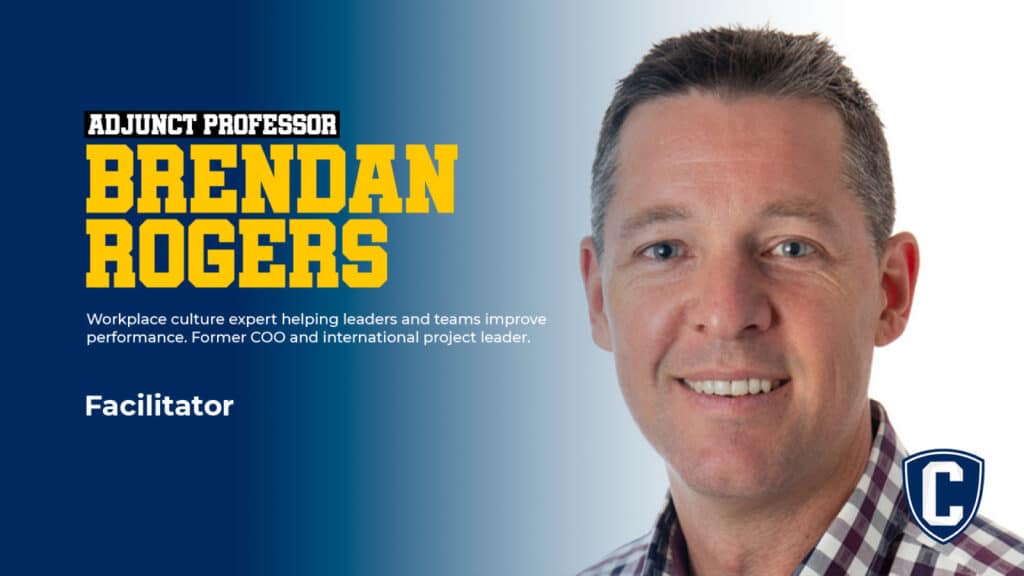
Meet Our Global Facilitators









About Chancellor Institute
A for-purpose enterprise, Chancellor Institute’s vision is to revolutionize the student experience with industry led, practical, and authentic lifelong holistic education.
We’re a founding partner of UniMinistry Foundation, a registered charity and non-denominational Christian organization.
Together, we are delivering innovative programs and experiences which are designed to bring ethics, personal and professional development to the centre of a person’s life.
Disclaimer
The Executive Master of Business Administration is available 100% online with live workshops.
Program structures are subject to change and students must check with their course advisors for the latest approved curriculum.
Not all programs and courses are offered in every intake.
Chancellor Institute charges fees on a per course basis.
All Chancellor Institute fees are in US Dollars unless stated otherwise.
We do not deliver courses to international students studying on a student visa in Australia.
Programs and courses may incur Goods and Services Tax (GST).
Prices are subject to change without notice.